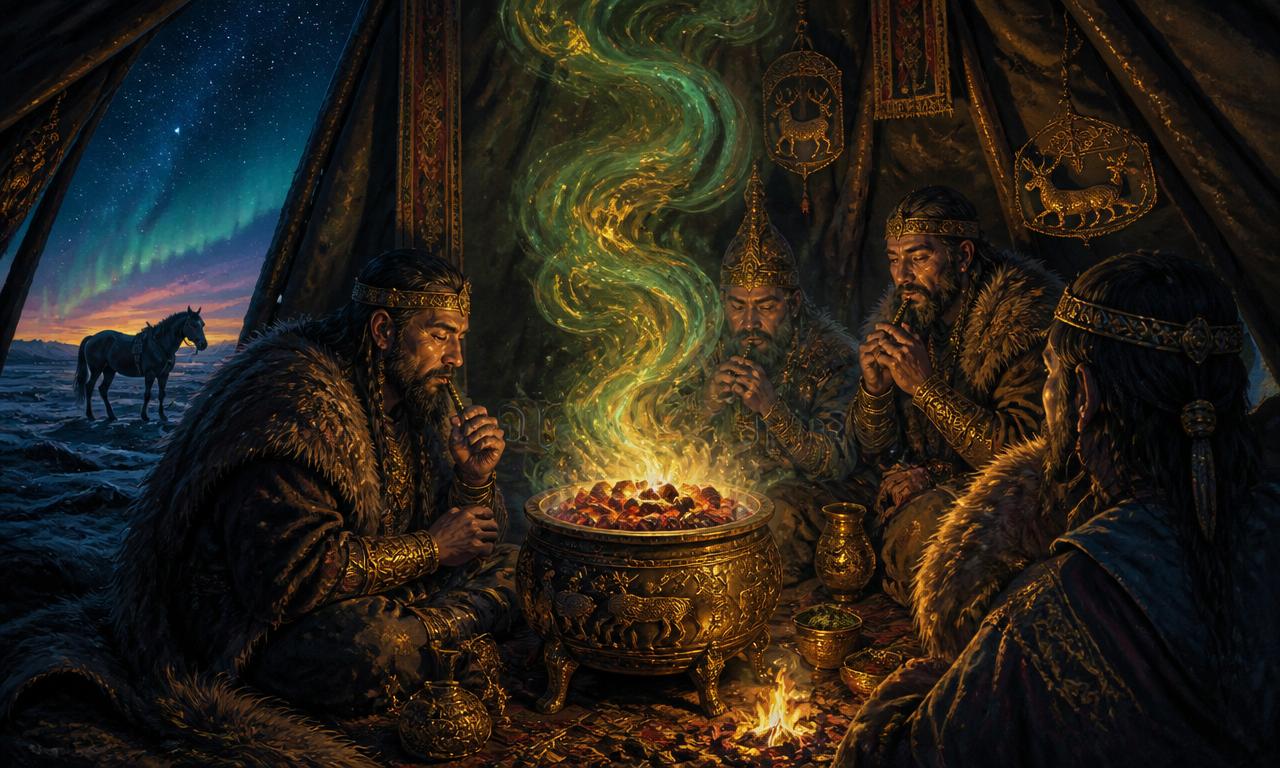
Imagine standing on the endless, windswept Eurasian steppe in the year 450 BCE. The wind is biting, the sky is an oppressive grey, and you are mourning a fallen warrior. This is the world of the Scythians — a fierce nomadic empire of horse archers who ruled the ancient wild. To honor their dead and cleanse their spirits, they did not just build monuments. They built a bridge to the spirit world using fire and a sacred plant.
The ritual of the felt
The Greek historian Herodotus sat by their campfires and watched the ritual firsthand. The Scythians, he wrote, would lean three long wooden poles together and wrap them tightly in heavy wool felts, forming a small airtight tent. Inside the pitch-black tent they placed a bronze cauldron filled with red-hot river stones. The warriors crawled inside, sealing the flap behind them. In the dark, suffocating heat, they threw handfuls of wild cannabis flowers directly onto the glowing rocks.
“The Scythians howl with joy at the vapor… it pleases them so much that they shout aloud.”
Frozen proof in the permafrost
For centuries, modern historians assumed Herodotus was exaggerating. Then, in the mid-twentieth century, archaeologists excavated frozen Scythian burial mounds in the Altai Mountains. Inside the permafrost they found exactly what he described: preserved leather pouches filled with wild cannabis seeds, small bronze cauldrons, and smooth, burnt river stones. It was not a myth. It was the ancient campfire, brought inside the tent, used to turn grief into ecstatic celebration.
Tend the sources
- Herodotus, Histories, Book IV (c. 440 BCE)
- Rudenko, Frozen Tombs of Siberia: The Pazyryk Burials (1970)
Smoke signals · watch the fire
- The Scythians: Nomadic Warriors of the SteppeKings and Generals
- Ancient Cannabis Use — Scythian Smoke TentsHistory explainer
- Pazyryk Burials — Frozen Tombs of SiberiaArchaeology documentary
Links open a YouTube search so the fire keeps burning even if a single video gets taken down.
Around this fire
0 logs · 0 voices
Listening for voices…